If you’re responsible for the internal air quality (IAQ) of a medical or healthcare facility, you’re likely facing increased scrutiny about the effectiveness of the current ventilation system. Managers of commercial and education buildings also have heightened IAQ concerns. Understanding air purification and the differences between standard and medical grade systems is essential to making the right choice of solution for your organization.
Air Purification vs Air Filtration
Improving IAQ can include cleaning and purifying the air. Although the terms seem synonymous, the activities are distinct in heating, ventilation, and cooling (HVAC) systems.
- Air cleaning or filtration removes particles with a size of 0.3 microns (µm) from the air before it enters your facility. Debris cleaned with air filtration includes dust, hair, spores, pollen, visible smoke, and bacteria.
- One measure of an air filtration system is the clean air delivery rate (CADR), a number that indicates the frequency of air exchanges per hour in your facility. In general, the CADR tests for pollutants that make people sneeze.
- Air purification sanitizes the air using various techniques such as heat, ultraviolet light, ozone, or negative ions. Air purifiers kill pathogens linked to allergies and illness.
- An air purification system’s mission is to remove odors, infectious contaminants, and volatile organic compounds (VOCs) like carbon monoxide and carbon dioxide. In a medical facility, air purification is vital to safe IAQ.
Differences Between Medical Grade and Standard Air Purification Systems
Within the HVAC marketplace, you’ll find many solutions for purifying the air in your facility. Commonalities of all air purification systems include:
- The ability to filter contaminants and allergens that can spread disease or illness.
- Delivery of safe IAQ for people with weakened immune systems.
- Removal of harmful fumes, gases, and particles.
Medical grade air purification systems raise IAQ’s standard by combining a robust filtration system that provides a high air change per hour rate (ACH) with purifying technologies.
- Filtration in medical-grade systems removes almost all airborne particulates.
- The system changes the air quickly to minimize the risk of exposure to airborne viruses.
- Top-notch medical facilities strive for an ACH rate of 15, meaning clean air enters your space every 4 minutes.
You can customize the design of your medical-grade air purification system to address the unique IAQ issues in your facility.
Components of Medical Grade Air Purification Systems
Elements of medical-grade air purification systems include filtration, ultraviolet light, coil cleaning, and final filters.
- HEPA Filtration
High-efficiency particulate air (HEPA) filters meet U.S. Department of Energy (DOE) standards. The filter’s pleated mechanical structure can remove 99.97 percent of airborne particles 0.3 microns (µm) as the worst-case scenario. A HEPA filter will effectively capture particulates that are larger (or smaller).
- UV-C Air Purifiers
Short-wave ultraviolet light (UV-C) inactivates airborne microorganisms and pathogens such as bacteria, mold, and viruses. Air passes UV lamps that use germicidal irradiation to disinfect the air. In medical grade systems, UV-C air purifiers are linked with a HEPA filtration system since a stand-alone UV-C air purifier can’t trap or remove particulates. When incorporating UV-C air purification into your medical-grade system, a key design consideration is determining the effectiveness achieved in each air pass.
- Coil Cleaning Process
UV-C light installed by professionals in an HVAC unit breaks down mold, hair, and notably, the biofilm that can adhere to HVAC coils. Biofilms are sticky bacteria and fungi that can grow on many surfaces in a medical or healthcare facility, causing a significant number of infections among staff and patients. In addition to preventing infectious disease spread, coil cleaning reduces energy and maintenance costs by eliminating airflow blocks and pressure drops.
- Typically, the UV-C system is downstream of the cooling coil. The UV-C light deactivates the biofilm’s ability to reproduce, preventing the growth of bacteria and mold on the coils and drain pans. By keeping the UV-C lights on continuously, the system can deliver a significant dosage with relatively low (and cost-effective) irradiance. In a medical-grade system, 50 to 100 microwatts/cm2 is a standard level.
- When properly designed with appropriate wattages, the UV-C system for cooling coil cleaning may also provide air disinfection benefits.
- High-Efficiency Final Filtration.
A medical-grade air purification system will include two filter components: one before the blower and coils and the second downstream from the coils.
- The first filter protects the HVAC equipment from dirt and contaminants in the air.
- The second filter captures any particulates that escaped the first filter or debris from the HVAC components.
- If, for example, the coils had mold or bacteria, the high-efficiency final filter would capture them before the air enters the healthcare area.
Does Your Facility Need a Medical Grade Air Purification System?
The benefits of adding air purification to an HVAC filtration system are clear for hospitals and healthcare facilities.
- The medical-grade systems control the pathogens brought in by visitors and mitigate the risk to patients with compromised immune systems. Technologies offer safe, clean air for staff, visitors, and clients.
With heightened concerns about IAQ, medical-grade air purification systems may also have value for:
- Educational facilities, especially for children with developing immune systems.
- Commercial buildings, where improved IAQ delivers peace of mind to teams and increased productivity.
- Fitness centers and gyms, since health is a primary goal, and air can contain dust, carbon dioxide, and contaminants like formaldehyde from equipment.
For more information about medical-grade air purification systems, contact our team. We’ll discuss your needs and design a system that meets government guidelines and keeps your business, staff, and clients safe.
]]>Even before the pandemic spread across the globe, building engineers faced increased concerns about indoor air quality. Commercial tenants ask about filtration systems and, fueled by the information available online, have learned about filter types and efficiencies. We’ve compiled a few practical tips to help you answer stakeholder questions and make sound decisions about commercial air filtration systems.
Reasons to Upgrade Your Commercial Air Filtration System
An air filtration system traps airborne particles of dust, toxins, or pollen before the air travels through the duct system in a commercial facility. Filters collect airborne contaminants, preventing inhalation by building occupants.
Triggers that spur discussions about upgrading the air cleaning system include:
- The age of the facility. According to the U.S. Energy Information Association (EIA), about one-half of commercial buildings are more than 40 years old. Many of these buildings have outdated air filtration systems.
- The age of the HVAC system. The life expectancy of a heating, cooling, and filtration system ranges from 5 to 20 years. With proper maintenance, the average lifespan is 15 years. The rapid pace of technology often makes the 10-year mark the right time to upgrade for more energy efficiency.
If you’re dealing with an aging building or an HVAC system at the end of its service life, it’s time to consider a new commercial air filtration system.
Engineering Considerations to Guide Your Decision about a Commercial Air Filtration System
The top 5 engineering parameters for a commercial air filtration system include the following:
- Goals for Air Filtration. Usually, engineers have 1 of 2 objectives when adding filtration to a commercial setting. They need a system that protects air circulation equipment or provides a healthier environment for the building occupants. The aim of the air cleaning system will help determine the type of filters to use.
- The American Society of Heating, Refrigerating, and Air Conditioning Engineers (ASHRAE) establishes the standard for evaluating a filter’s ability to remove contaminants from the air. Filter ratings reflect the particle size in microns captured during testing. Test results include a Minimum Efficiency Reporting Value (MERV) from 1 to 16 that helps you select the right filter for the task. The higher the MERV rating, the greater the ability to remove smaller-sized particles.
- If your objective is keeping air circulation equipment clean, then a filter with a 6 to 8 MERV rating will remove 50 to 85 percent of particulates.
- For delivering cleaner air to building occupants, filters with a MERV of 14 will effectively tackle 80 to 90 percent of contaminants.
- Building Pressure. As you’re designing an air filtration system, understanding and managing the building pressure will improve the equipment’s effectiveness.
- By limiting or eliminating infiltration (indoor pressure is less than outdoor and leaks in), you’ll minimize HVAC loads and reduce operating costs. During warmer months, controlling infiltration (negative pressure) will lower the risk of microbial growth and structural deterioration.
- Exfiltration, where indoor pressure is higher than outdoor, can create noise around windows and doors and make temperature control more difficult. Positive pressure during winter can create condensation, which contributes to structural weakening.
- Ideally, your air filtration systems should help you maintain a cold-weather pressure of slightly negative to neutral and a warm-weather range of neutral to slightly positive.
- Particulate Air Filtration. The air filtration system for your commercial facility should capture your targeted particle size. The Environmental Protection Agency (EPA) offers guidance about particulate matter, and various filter designs are available to address the level of pollution you want to control.
- Pollution levels include the following:
- PM10: inhalable particles smaller than 10 µm in diameter
- PM2.5: fine inhalable particles smaller than 2.5 µm
- PM1: particles less than 1 micron in size, which represent 98 percent of all air particulates
- Pollution levels include the following:
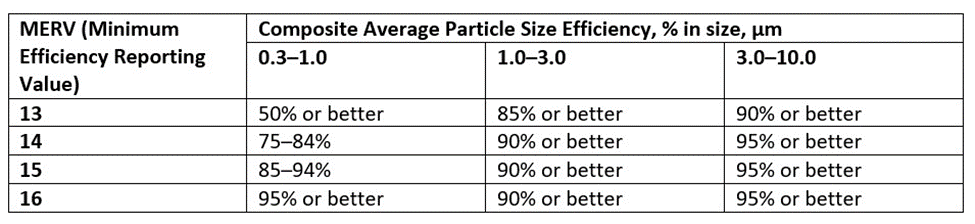
- Air Filter Bypass. Air that escapes filtering can foul the fans and coils of an HVAC system, reducing airflow and heat transfer. To minimize filter bypass, engineering activities should include:
- Checking that filter installation and gasketing are correct, to minimize gaps.
- Verifying proper sealing of air handler doors and ducts.
- Aligning the change schedule to the filter’s MERV performance rating.
- Higher performance filters get dirty faster than filters with lower ratings; bypass can increase by roughly 10 percent on a contaminated filter.
- Installation and Maintenance. Partnering with trained HVAC experts ensures your air cleaning system operates safely and delivers the performance you need at your facility.
- Proper installation of duct liners and boarding prevents exposure to moisture that encourages mold growth.
- Professionals will de-grease metal air ducts reducing the number of dirt particles trapped in the system.
- Scheduled maintenance, including appropriately timed filter changes, will keep your system running efficiently.
- The addition of indoor air quality meters to measure air particulates will help you respond quickly if your air filtration system is underperforming.
Benefits of an Energy-Efficient, Cutting Edge Commercial Air Filtration System
A well-designed air cleaning system with a top-notch filter will improve your facility’s indoor air quality.
Building occupants (and owners) will enjoy:
- Reduced exposure to airborne contaminants like viruses, bacteria, and allergens.
- A healthier environment (and less sick leave).
- Peace of mind about internal air quality.
- Improved ventilation and airflow.
- Better control of invasion of airborne particulates from external sources like vehicles, fires, and viruses.
- Higher system efficiency.
- Lower costs for heating and cooling.
Clean Air — It’s Worth it, and it’s Achievable!
Ready to upgrade your commercial air filtration system for better performance and improved air quality for occupants? Contact our team to schedule a convenient time to talk about your goals and plan what’s best for your building’s air filtration system.
]]>Our understanding of the link between indoor air quality (IAQ) and health isn’t new. As early as the 1850s, recognition of IAQ’s importance drove efforts to improve conditions for consumers. The rise of outdoor pollutants shifted concerns to external air quality in the 1960s, but research shows IAQ continues to affect asthma rates, airway infections, and lung cancer.
According to EPA research, Americans now spend almost 90 percent of their time indoors, where pollutant concentrations, including viruses, are 2 to 5 times higher than the outdoors.
Techniques identified for improving IAQ include:
-
Ventilating in outdoor air inside to dilute internal air.
Unfortunately, this approach often has a high energy cost, making it challenging to maintain IAQ and energy efficiency.
The moisture content of external air can also contribute to condensation and the growth of mold within ventilation systems.
-
Using indoor purification methods such as ultraviolet irradiation, ozone oxidation, and bipolar ionization.
While these methods can destroy microorganisms and reduce Volatile Organic Compounds (VOC) levels, some are less effective at removing large particulates or controlling other gases like CO2 or ozone. Others, like UV radiation, have limited surface coverage.
Fortunately, technological innovations in heating, ventilation, and air conditioning (HVAC) filtration systems provide effective IAQ solutions.
What is Bipolar Ionization?
The history of bipolar ionization traces back to the late 19th century when William Crookes discovered how to charge or ionize molecules within cathode tubes. Fast-forward to the 1970s US food producers adopted European precedents to incorporate bipolar ionization systems to control pathogens in manufacturing facilities. By 2004, researchers discovered that ionization rendered the SARS virus inactive.
When integrated into HVAC systems, the bipolar ionization tubes generate positive and negative ions that release as air flows through ducts. Ions cluster around mold, bacteria, and viruses, then trigger the harmful oxidation of cells and a breakdown of gases. The process neutralizes odors and eliminates VOCs.
Ions also attach to dust and breath droplets, enlarging them sufficiently for filtration.
The initial bipolar ionization systems relied on glass tubes, increasing the fragility and cost of the generators. A harmful level of ozone was often released during the ionization process.
By the mid-2000s, advancements led to needlepoint bipolar ionization (NBPI), which builds on the benefits of bipolar ionization by reducing ozone by-products.
- NBPI systems don’t rely on a dielectric, an insulator that’s polarized during the process. Instead, the controlled power output prevents the production of ozone or other by-products.
- The needlepoint bipolar ionization technology also breaks down VOCs into O2, CO2, N2, and H2O.
- Ions travel with the air stream into occupied and unseen areas and have microbicidal power against pathogens, reducing the infectiousness of viruses.
Why Install Needlepoint Bipolar Ionization
In the near term, until researchers understand COVID-19 better and the true numbers come to light, delivering high IAQ in commercial buildings is essential to staff health and well-being. The top 3 reasons for choosing NBPI for your organization are:
-
To provide consistent, active disinfection of your facility. COVID-19’s aerosolized spread and extended life in air demand an aggressive approach to air-cleaning.
Researchers know that coronaviruses are enveloped, making them easier to isolate and eradicate than other viruses.
- To leverage a proven technology used to control IAQ at leading organizations, including Johns Hopkins Medical Center, the White House, and Google headquarters. Airforce One also has an NBPI system onboard.
- To limit the need for external ventilation, minimizing the risk of microorganism growth in the building.
NBPI has Proven Effective for Improving Air Quality
Needlepoint bipolar ionization demonstrates results under rigorous testing in laboratory settings, simulations, and in the field.
- Controlled lab testing showed:
- Norovirus had a 93.5 percent rate of reduction within 30 minutes
- Coronavirus dropped 90 percent within 60 minutes
- Legionella reduced 99.7% within 30 minutes
- Simulations which modeled real-world environments demonstrated:
- Tuberculosis had a 69 percent rate of reduction in 60 minutes
- MRSA and Staphylococcus saw a 96.2 percent drop in 30 minutes
- E.coli declined 99.6 percent in 15 minutes
- Field testing also produced favorable outcomes:
- In a major medical center, gram-negative rods dropped to zero in 6 test rooms compared to control, and isolated pathogens declined by 64 to 99 percent
- An air travel command center showed particle reductions within a month of:
- 0.3 microns by 87.2 percent
- 0.5 microns by 95.4 percent
- 1 micron by 95.8 percent
Installation of NBPI is Easy
Needlepoint bipolar ionization systems from Commercial Filter Sales & Service fit easily within new or existing HVAC equipment.
- NBPI attaches to the entering side of a cooling coil.
- No need for increased system pressure, other fans, larger filters, or modifications to air handling or ducts.
- NBPI typically requires minimal maintenance or replacement parts, with designs that last for the air handling system’s lifetime.
Additional features include:
- Versatility, with almost no size restriction. A single power supply, for example, can service 6 12-foot bars covering a 150,000 cubic feet per minute air handler.
- Automatic cleaning feature for direct current (DC) NBPI systems to control dust and maximize performance.
- All NBPI technology comes with a universal voltage input capable of handling 24 to 240 volts in AC or DC.
- Power requirements are low, pulling power from the control circuit.
Partner with CFS for Improved IAQ with Needlepoint Bipolar Ionization
For more information about NBPI, contact our team. We’ll discuss your needs and find the right solution for you and your staff. Delivering consistently good internal air quality is vital for staff health and building safety. Let’s talk about how NBIP can help you today!
]]>